
How Geo-Restrictions Affect Live Streaming and Global Audience Growth
How geo-restrictions block live streams in some countries, why they hurt reach and viewer trust, and what creators and brands can do to limit the damage.
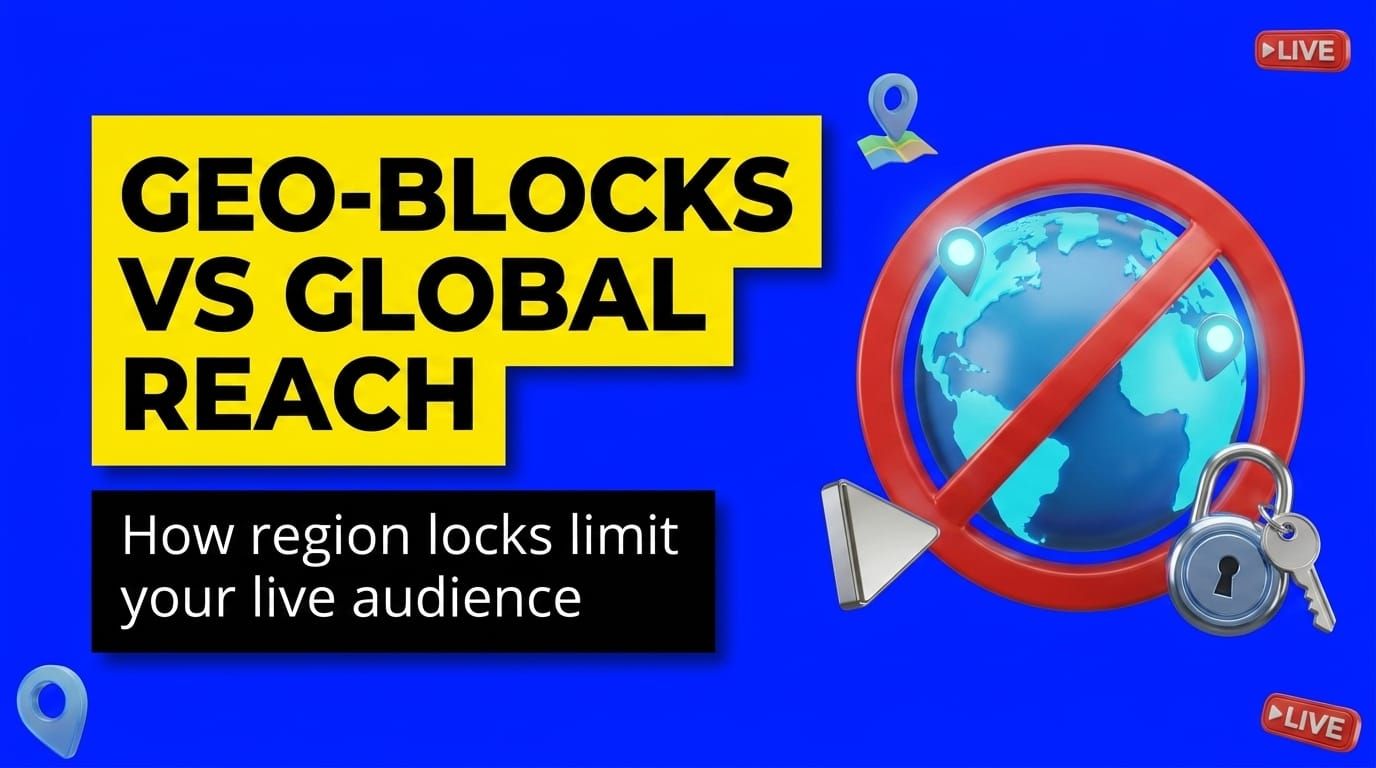
Live streaming is supposed to erase distance. One person goes live, and people around the world watch in real time. That is the promise. The reality is messier. Geo-restrictions can block or limit your content for viewers in other countries, and that hits creators, media brands, and event hosts hardest exactly when they are trying to grow a global audience.
A stream might be available in one country and blocked in another for several reasons: licensing terms, copyright claims, platform policy, or local law. The result is always the same. Fewer views, less engagement, fewer return visitors.
This is not a quiet backend problem. It affects reach, watch time, trust, and revenue. If your goal is a worldwide audience, geo-restrictions can cut that audience in half before the stream even gets going.
What Geo-Restrictions Mean in Live Streaming
Geo-restrictions are limits placed on digital content based on where the viewer is located. In live streaming, they stop people in certain countries from reaching a live event, a replay, or a premium stream.
Sometimes the stream is cut off entirely. Other times parts of it are limited, muted, or disabled once the live session ends.
The usual cause is content rights sold country by country. Most major sports events, for example, are licensed separately across the UK, Germany, and Asia. The same problem shows up at:
- Concerts
- Webinars
- Entertainment streams
- Brand events that play copyrighted music or third-party video
Platforms add their own rules on top. When copyrighted content appears in a live stream, YouTube can interrupt or block the broadcast, especially if it matches material that is already protected. This is spelled out in their broadcast and copyright guidelines. A creator who does not hold the rights to content shown in a stream can be restricted from it, and the stream can be removed. This is also why streaming music without a copyright problem matters so much for anyone going live regularly.
Why Geo-Restrictions Hurt Global Audience Growth
The damage starts with reach. When a stream is blocked in a country where you have viewers, those viewers cannot watch, share, or comment. And the loss is bigger than the live numbers suggest.
Live streaming grows on momentum. During the event, people:
- Join
- Comment
- Share links
- Invite others to watch
That chain breaks the moment a viewer clicks the stream and gets a location error instead of content. If that one viewer was going to share it with friends, colleagues, or followers, a single block can cost you five more viewers downstream.
It hurts replay performance too. Some creators assume they can fix the problem by uploading the stream later. That helps, but it does not replace the live moment. A region-blocked replay usually stays region-blocked. And even when the replay works, the urgency, the chat, and the shared community of the live event are already gone. Real-time interaction is a big part of what drives live engagement, and you cannot recreate it after the fact.
The stakes are higher for brands. A live product demo, online event, or webinar is usually tied to:
- Sign-ups
- Leads
- Sales
When viewers cannot get in, they rarely assume it is a licensing issue. They assume the brand failed to deliver, and that costs you trust.
Why Platforms and Rights Holders Use Geo-Restrictions
Geo-restrictions are annoying, but they usually come from business or legal rules, not arbitrary choices.
- Licensing is the most common reason. Media rights are often sold by region, so a platform may be allowed to play a stream in one country and not another. Plenty of sports and entertainment broadcasts fall into this.
- Copyright enforcement is the second. Live streams can be restricted in certain regions, or pulled entirely, if they contain music, movie clips, match footage, or other protected material. Under YouTube's live-streaming copyright policy, a stream can be interrupted when someone is found broadcasting third-party content they were not cleared to use.
- Local law and compliance is the third. Some countries apply stricter rules to gambling, political content, privacy, and age-restricted material. Platforms may limit access to stay compliant in those regions.
How Geo-Restrictions Affect Viewer Trust
This part gets missed. Geo-restrictions are not only about access. They erode viewer trust.
When someone clicks into a live event and gets blocked, they feel shut out of the moment. When it happens more than once, they stop bothering with that creator or brand. Over time, that wears down loyalty. Smaller creators and startups are especially exposed here, because they are still earning trust with an international audience.
There is a quality problem too. Live streaming is built on shared timing. Viewers show up for:
- The chat
- The reactions
- The announcements
- The limited-time offers
- The feeling of being there with everyone else
That is exactly what a blocked stream takes away. A replay later is useful, but it is never as strong as being in the room when it happens.
What Streamers Can Do to Reduce the Problem
You are not powerless here. Geo-restrictions cannot always be avoided, especially when rights deals are involved. But with the right planning, creators and brands can limit the damage.
- Check your content before going live. Background music, event footage, guest clips, and branded media can all trigger copyright issues. If you do not fully control those rights, your stream is more exposed.
- Set ground rules early. If access may vary by region, say so before the event. A clear notice is far better than leaving viewers to figure it out on their own.
- Test access beforehand. Programs that depend on a global audience usually check how a stream looks from different countries before launch. This is why some marketers and creators turn to VPNOverview analysis when reviewing location-based access, privacy options, and the overall impact of region locks on streaming platforms.
- Reach more platforms at once. A block on one platform in one region does not have to end the event. Streaming to several destinations widens your safety net, and you can multistream to YouTube, Facebook, Twitch, and more without OBS so a single restriction does not take the whole audience offline.
- Provide an alternative. When restrictions cannot be avoided, give people another way in: a replay, a highlight, or a local partner feed where rights allow. With LiveReacting you can stream a pre-recorded video as live or run a 24/7 channel so a backup version is ready before viewers ever hit a blank error page. A backup will not solve everything, but it beats a dead end.
The simplest version of all this: upload your video, go live in about five minutes, and let the platform handle the rest. LiveReacting runs in the browser with no extra hardware, and the same setup scales up to overlays, live guests, and interactive features when you need them.
Conclusion
Geo-restrictions are not just a technical access problem. They cut reach, weaken live engagement, lower replay value, and erode viewer trust. For any creator or brand trying to grow beyond a single market, that is a real problem, not a minor inconvenience.
The good news is that a lot of the damage is preventable. Think about copyright early, avoid content you cannot clear, test regional access, and prepare a backup way to watch. Do that, and your live stream is far more likely to reach the audience you built it for. Visibility drives growth, and no one can grow a community they cannot reach. When you are ready to widen that reach, see how LiveReacting helps you go live and stay live.
FAQs
1. What does geo-restriction mean in live streaming?
It is a geo-blocking rule that prevents a live event or replay from being streamed in a specific country.
2. Why do platforms block live content?
Usually because of licensing agreements, copyright claims, or platform policy restrictions.
3. Do geo-restrictions affect audience growth?
Yes. They limit reach, reduce live engagement, and make it harder to build an international audience.
4. Can a streamer fully bypass geo-restrictions?
Not always. When legal rights or platform rules are involved, the better approach is to plan around them, avoid problematic content, and offer backup access where appropriate.
5. Can replays be geo-restricted too?
Yes. In some regions a replay can also be blocked when the same rights or copyright rules apply.
Transform Your Live Streams with LiveReacting
Join 10,000+ streamers who are boosting engagement and viewership by adding pre-recorded videos, games, polls, and countdowns to their streams.
Try LiveReacting for free today and take your streams to the next level!